

TelPROGNOSE
Media consumption forecasting system based on neural networks

AI-Driven Forecasting
The TelPROGNOSE system is an advanced tool used for forecasting demand for gas (or other media) in distribution and transmission networks. Due to the high inertia of the system, this process is crucial for effective network management.
The software package utilizes artificial neural networks (Artificial Intelligence), allowing for the automation of building and adapting the mathematical model. Users do not need to manually select parameters or understand complex physical dependencies – the system 'learns' them based on historical data.
TelPROGNOSE is fully integrated with the TelWin SCADA system, and forecasting results and historical data are stored in an Oracle database, ensuring easy access and data security.
System modules
TelProgCfg
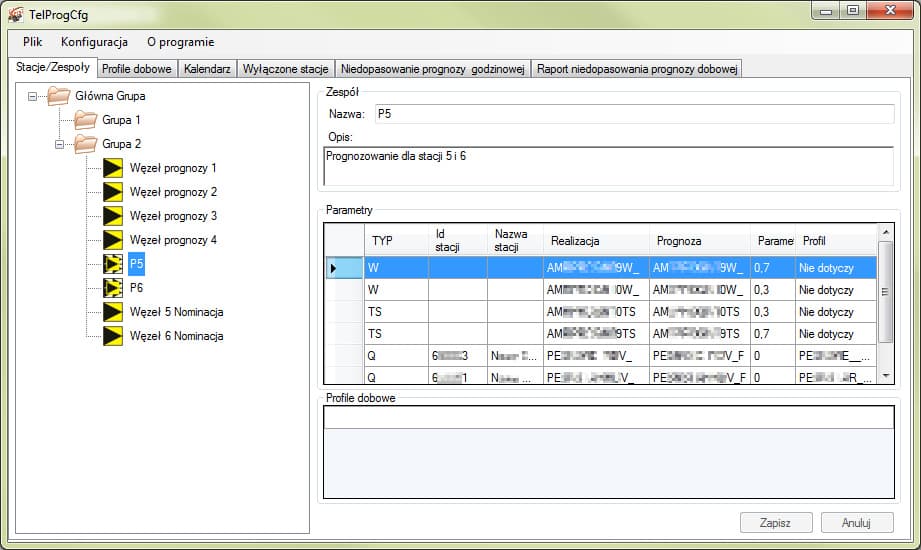
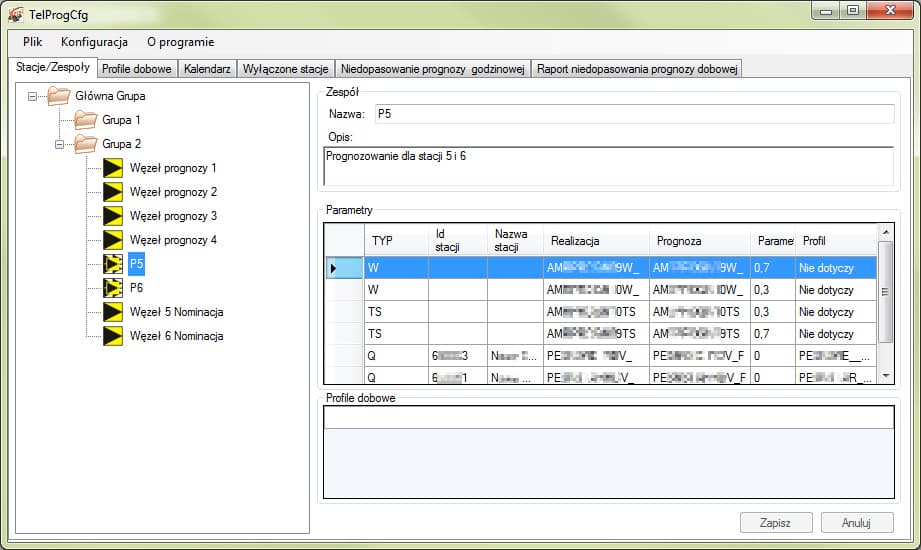
Configuration module used for defining forecast nodes. It enables creating forecasts for individual stations or groups of stations (balancing nodes). Allows for flexible adjustment of the forecasted network structure.
TelProgRun
Calculation (Run-time) module. Operates continuously or on demand, performing the process of training the neural network and generating forecasts based on current input data.
Forecasting methodology
How does our neural network work?
Multi-layer neural network
The TelPROGNOSE system utilizes advanced neural network algorithms for modeling and forecasting gas consumption. This process eliminates the need for manual tuning, and the system autonomously adapts to changing conditions.
Network Structure
A multi-layer neural network (min. 3 layers: input, hidden, output). The number of neurons in the hidden layers is determined empirically to optimize results. The output neuron returns the forecasted value.
Input Data
Environmental parameters (temperature, wind) with the possibility of aggregation from multiple areas, and flow history. Inputs are standardized to the [0,1] range.
Training Process
Backpropagation algorithm. Data is divided into training and testing sets. The training process typically takes about 200 epochs, which prevents network overfitting (loss of flexibility).
Forecasting
Generation of a forecast vector for 7 days ahead. The daily value for a station group is distributed to individual objects, taking into account technical and contractual constraints.
Activation function (Sigmoidal)
Forecast quality assessment
The training process involves minimizing the forecast error. The Mean Absolute Percentage Error (MAPE), a standard in evaluating energy forecast quality, is used as the error metric.
Mean Absolute Percentage Error (MAPE)
- Ei: Forecast error for the i-th day
- Ri: Actual value (realized)
- Fi: Forecasted value
- E: Total average error for the given period
Results and Configuration
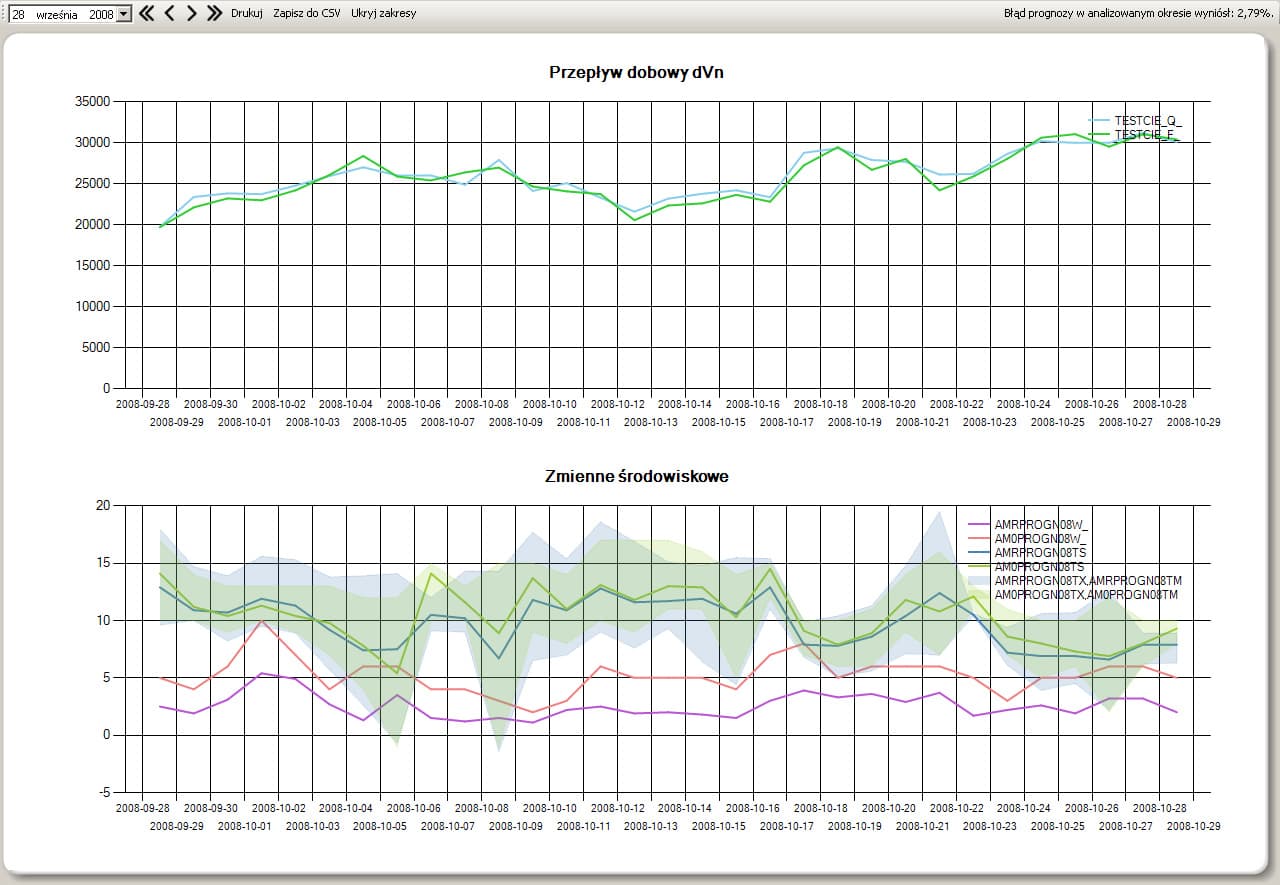
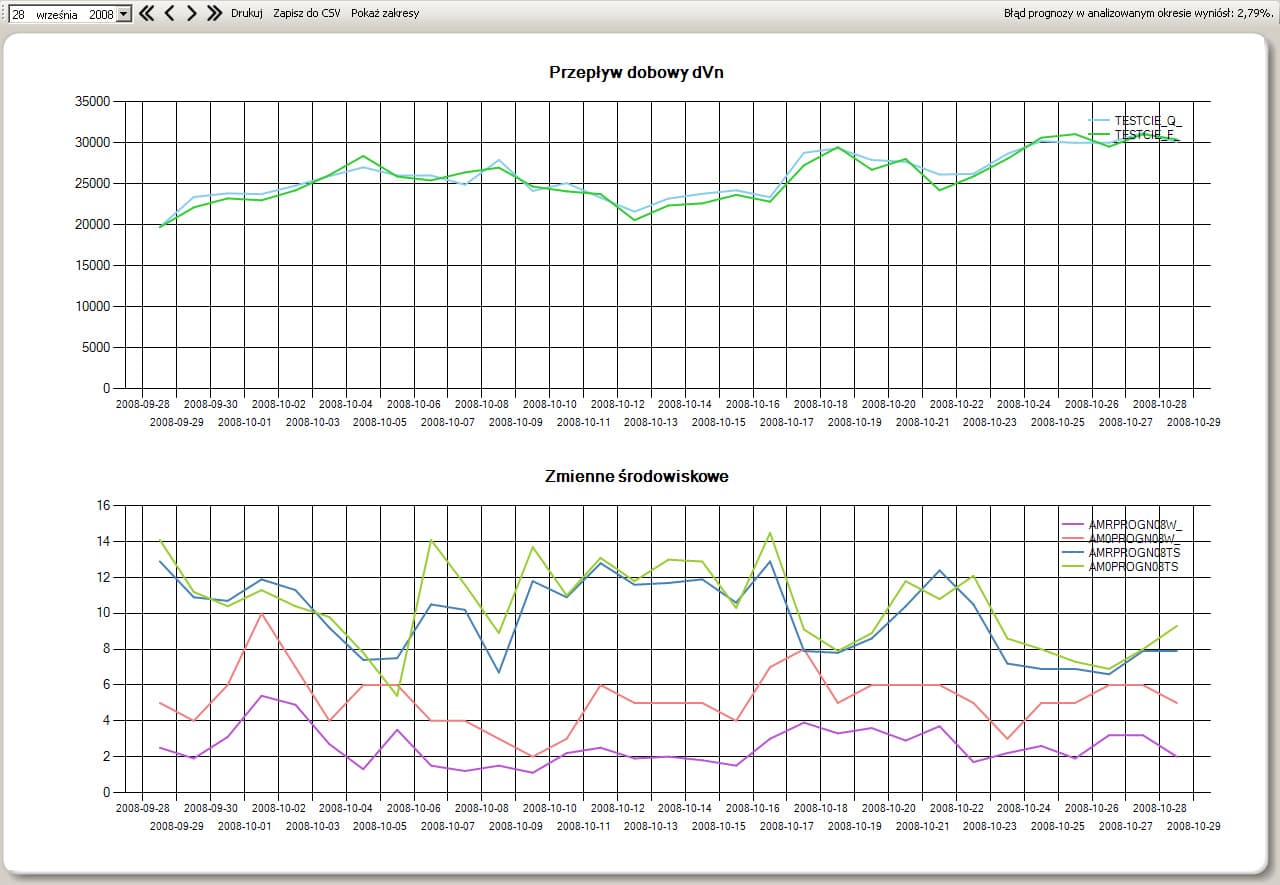
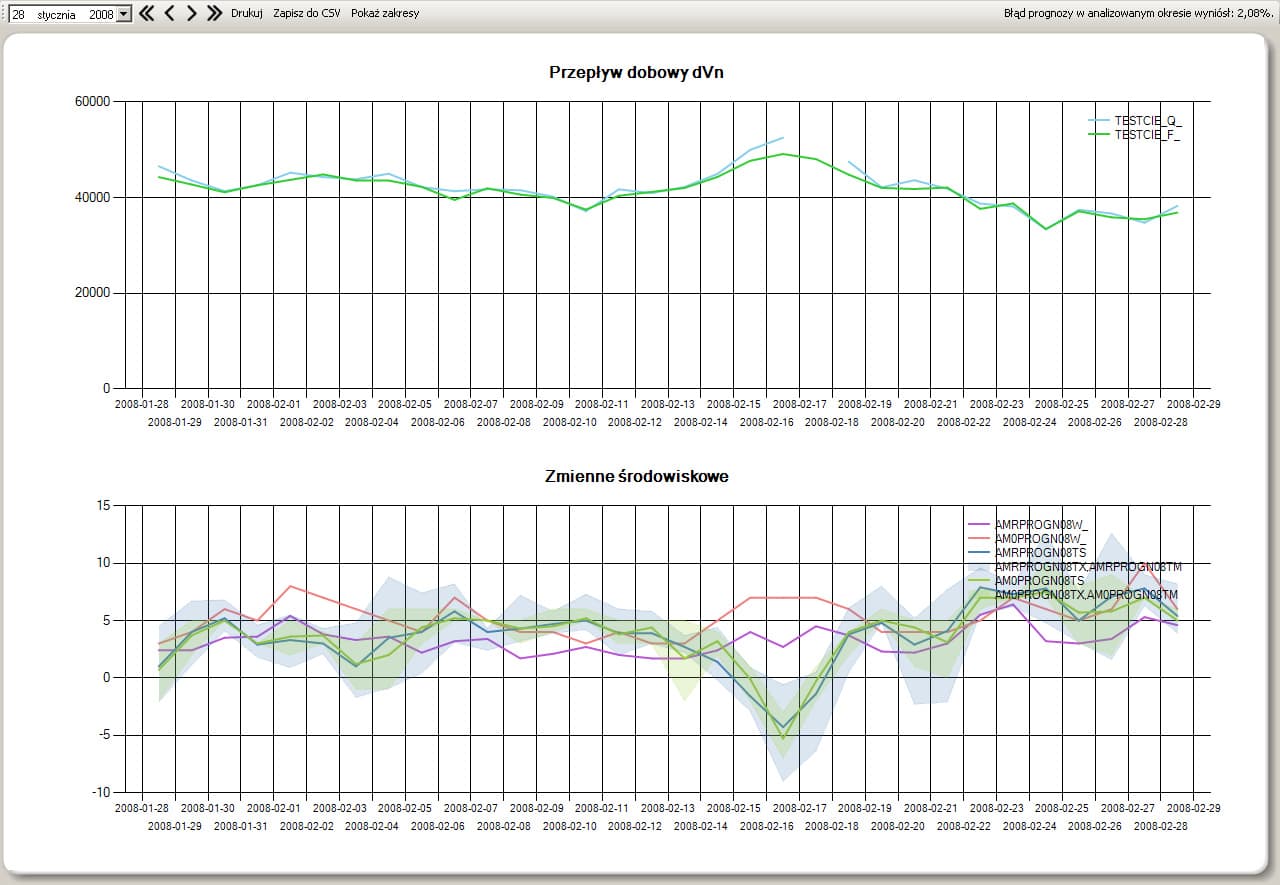
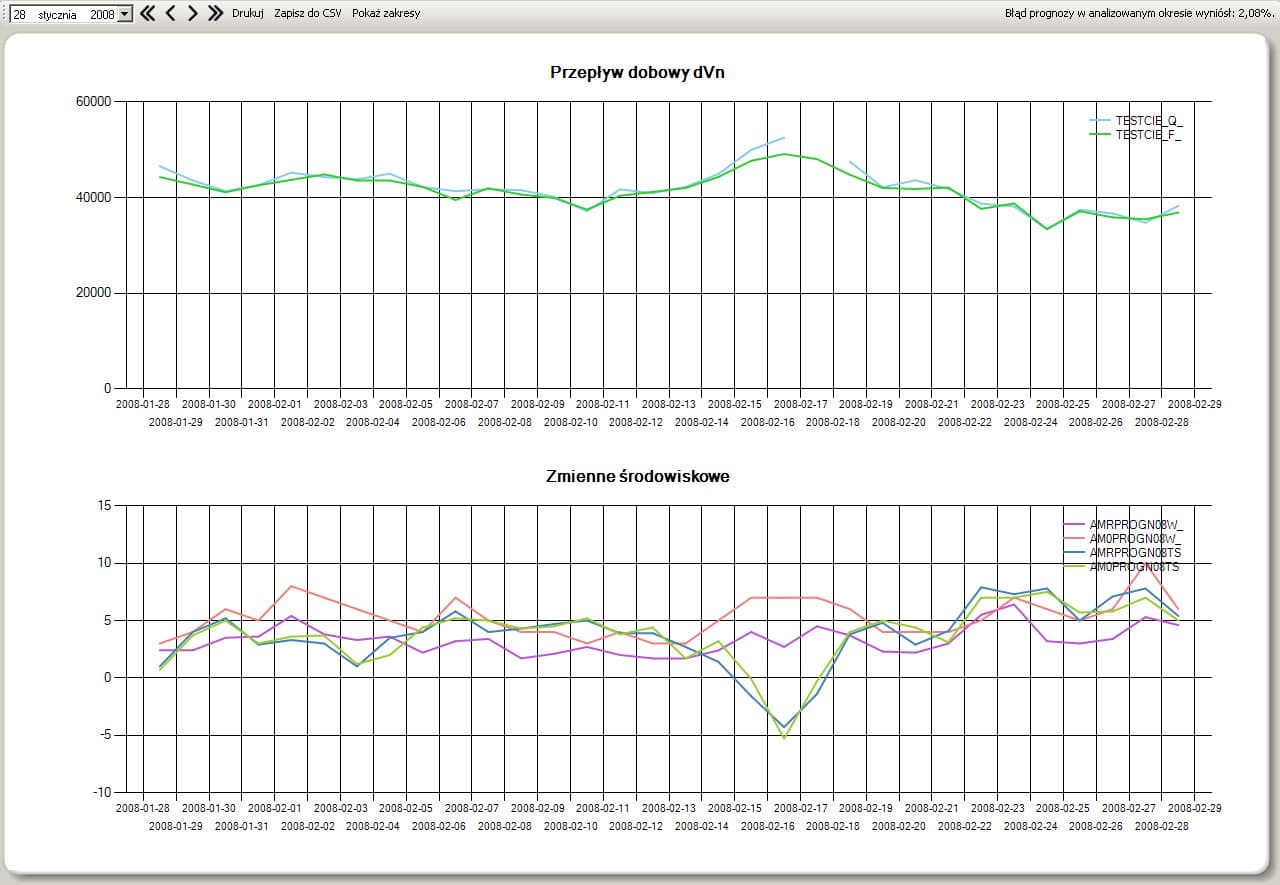
Examples of node configuration and charts showing the effectiveness of forecasts compared to actual consumption.
Increase network efficiency
Contact us to learn more about the possibilities of implementing the TelPROGNOSE system.